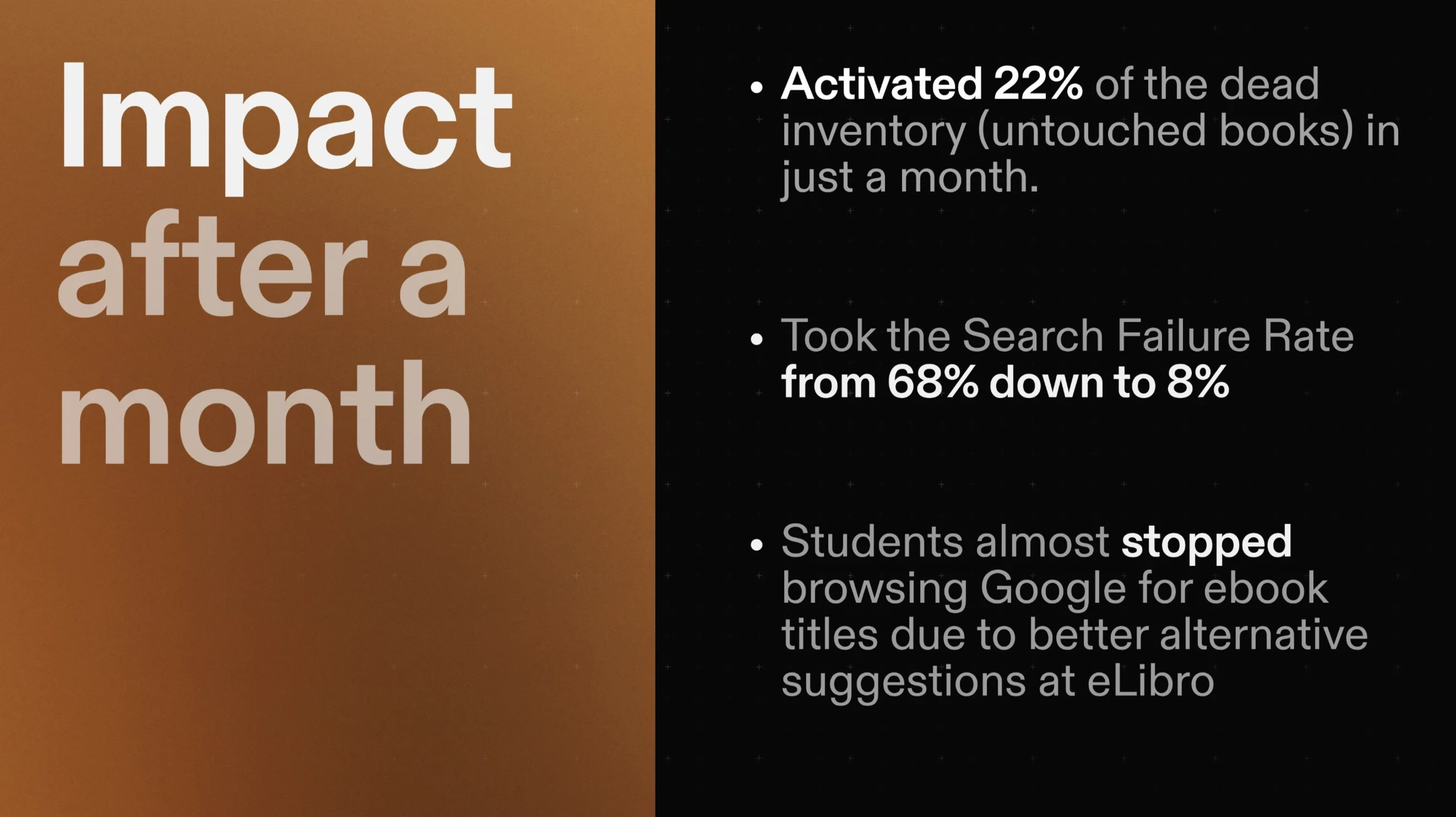
How eLibro transformed a rigid University Legacy library platform (B2B) into an AI conversational ebooks discovery engine, reducing search abandonment by 68%.

PROBLEM STATEMENT
The university’s heavy subscription investment in digital books is largely going in vain, as a restrictive legacy platform that forces students onto external browsers has resulting in 84% of the 100,000 book collection remaining entirely untouched.
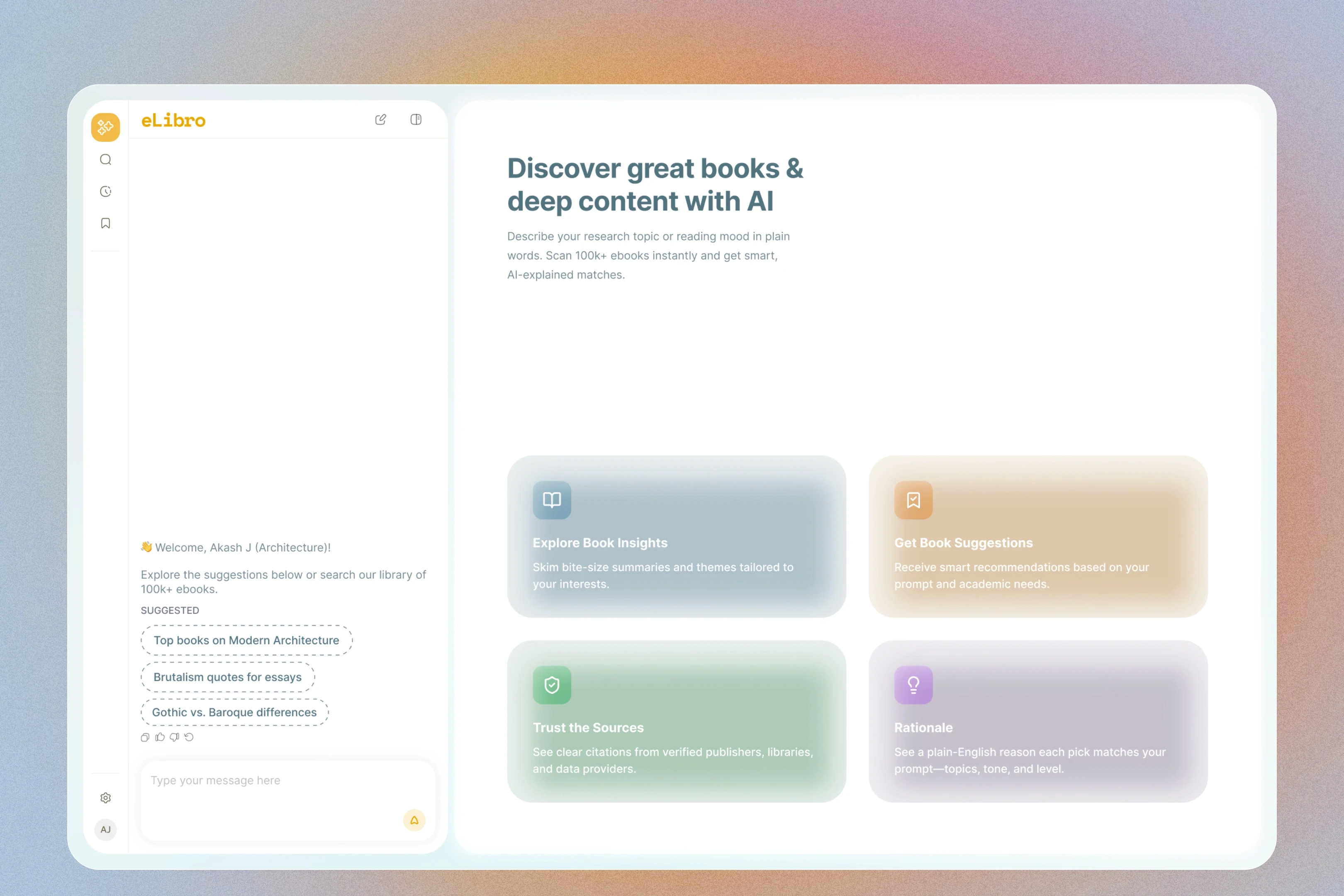
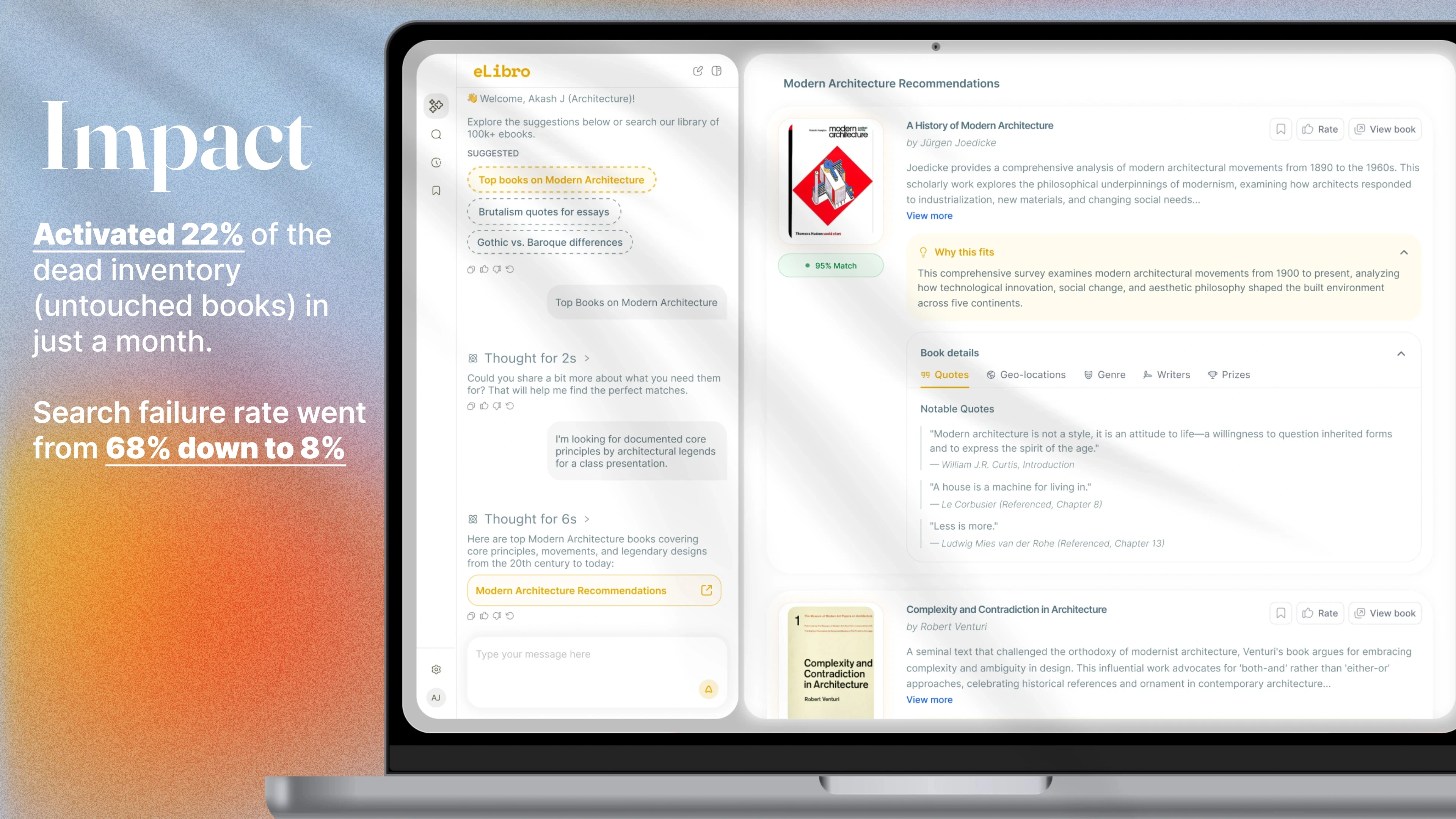
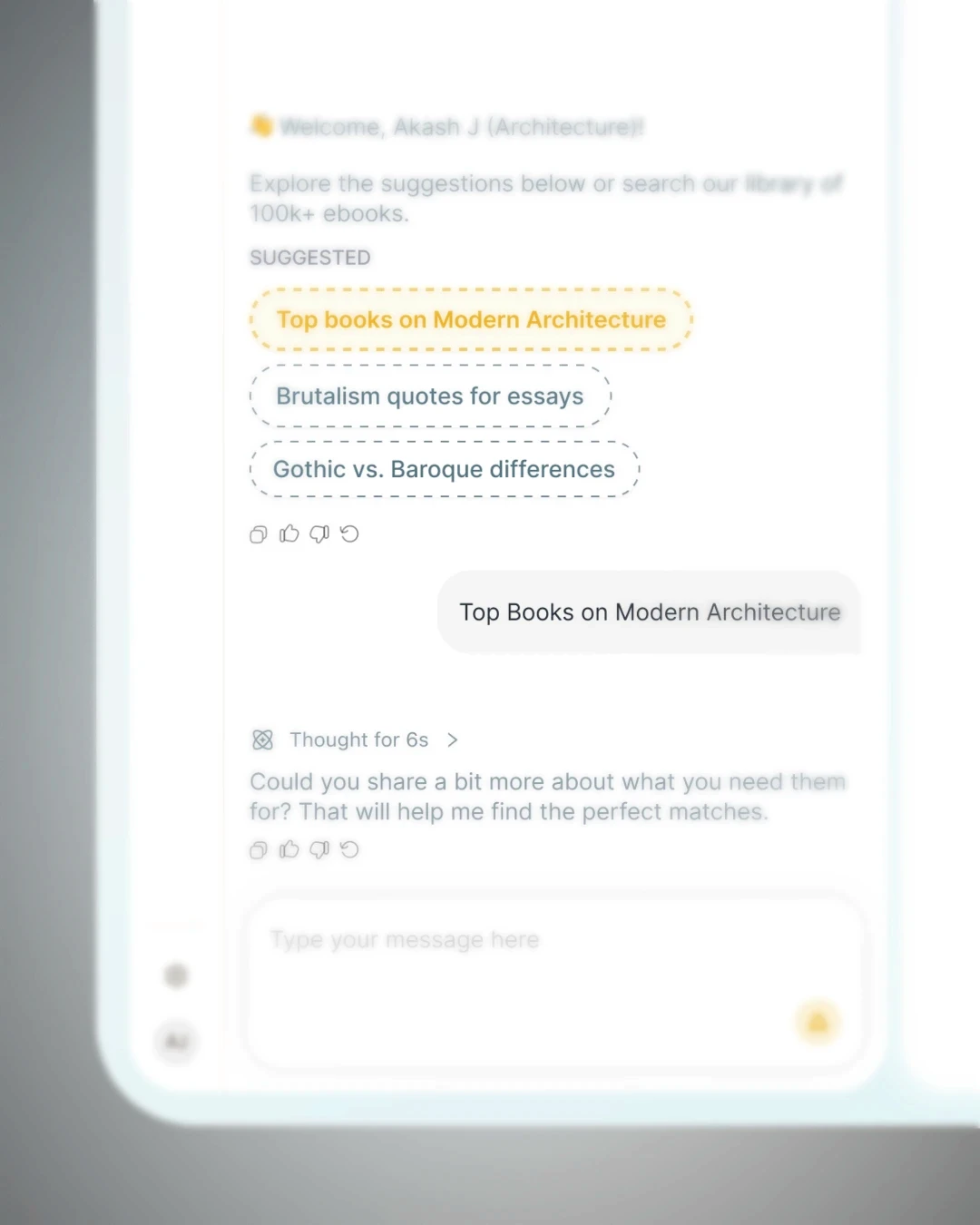
DESIGN SOLUTION PREVIEW

PROBLEM STATEMENT
Annotation teams at enterprise clients needed to produce datasets of 100,000+ images for AI model training — but existing tools assumed technical users. Non-technical annotators were doing everything manually from scratch, making the process slow, inconsistent, and expensive. The goal was to design an AI-assisted platform that non-technical users could operate confidently, while cutting annotation time and cost by at least 50% by shifting human effort from creation to review.
Everytime the student wants to access ebooks this is the pain user is going through with the legacy library platform

Current Legacy Platform Flow


Source
The University Invests on subscriptions to 50+ Publishers every year (Pearson, Oxford, Wiley, …) Each publisher has their own separate interface to search books
Bottleneck
To avoid fragmentation, the Library acts as a "Discovery Layer," allowing students to search all vendors via a single interface.
Technical constraint
They ingest Metadata only (Title, Author, Tags), not the full text. This limits the search engine's ability to "see inside" the books, making exact keywords mandatory. Each publisher has their own separate interface to search books
After the discovery call with the client…
We wanted to understand where and what is going wrong in the current university library platform to lock the problem statement, which helps entire team be on same page
So made frontend dev to implement Google Analytics 4 (GA4) to the current platform to observe for 30 days.

After the 30-Days Diagnosis…
84% Untouched eBooks
Almost 84% of the ebooks are untouched. Since the university has subscribed publishers.
We got this data by analysing how many book IDs were not triggered (zero views) since the start by the backend dev.
68% (0 results found)
Everything finally felt more polished, organized, and easier for our team.
Everything finally felt more polished, organized, and easier for our team.
8/10 students browsing books externally
Everything finally felt more polished, organized, and easier for our team.
Everything finally felt more polished, organized, and easier for our team.
63% Desktop-first workflow
Everything finally felt more polished, organized, and easier for our team.
Everything finally felt more polished, organized, and easier for our team.
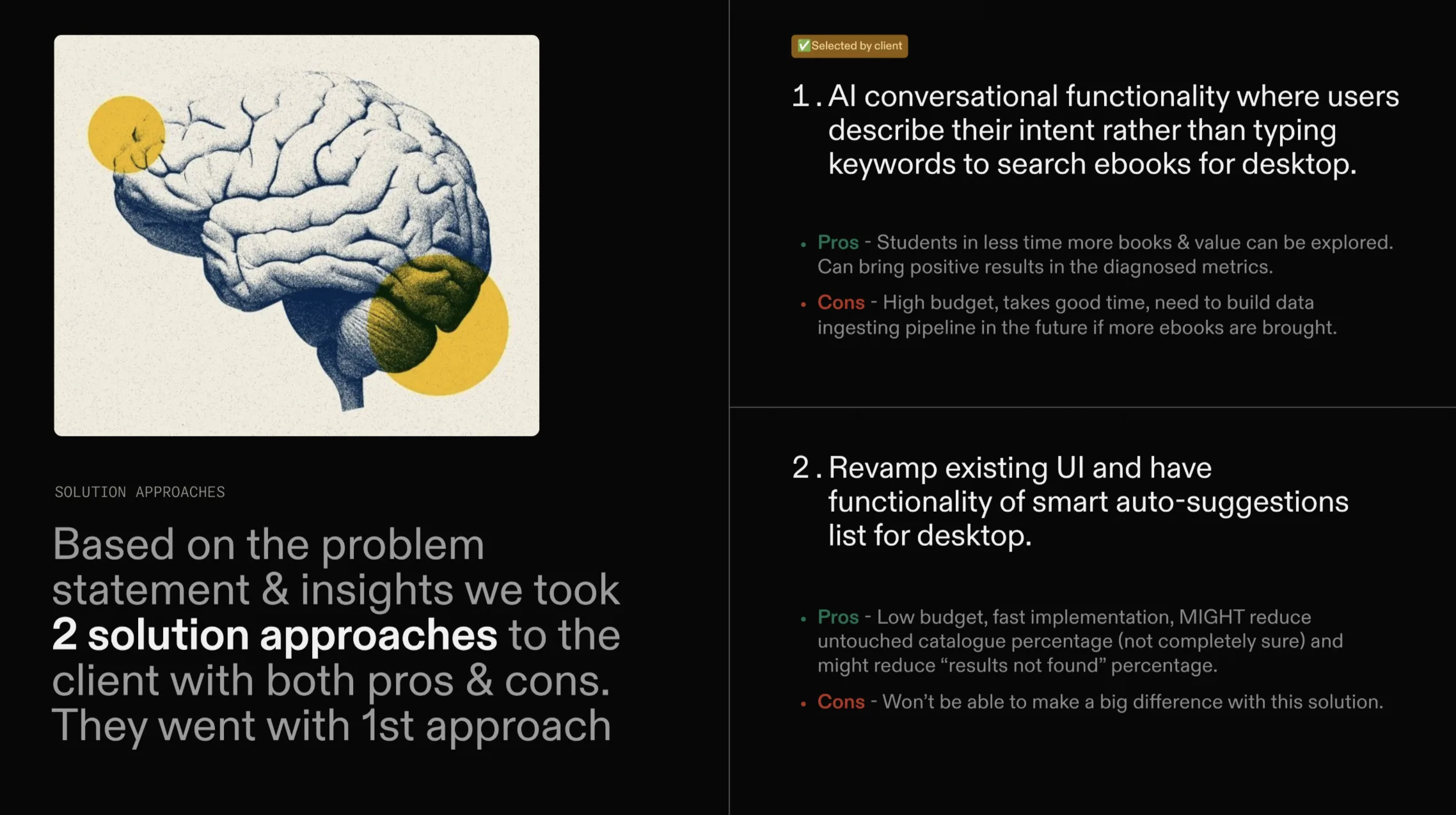
Finally…! after couple of UI implementation discusions with the frontend team, tech possibilities with backend team, client deadlines from PM, direction from product owner and after lot of UI Iterations & meetings we came up wth the final solution.