How we reduced image annotation time by up to 80% and improved accuracy by integrating AI assistance into the image annotation workflow

OVERVIEW
Designing fast, accurate labeling tools for computer vision. Making object detection, classification, and segmentation simple for everyone.
Year
2025
Client
Techolution Internal Product
Contribution
UX Process & UI Design
Impact
Reduced 80% of annotation time
We Built it Together
MY ROLE
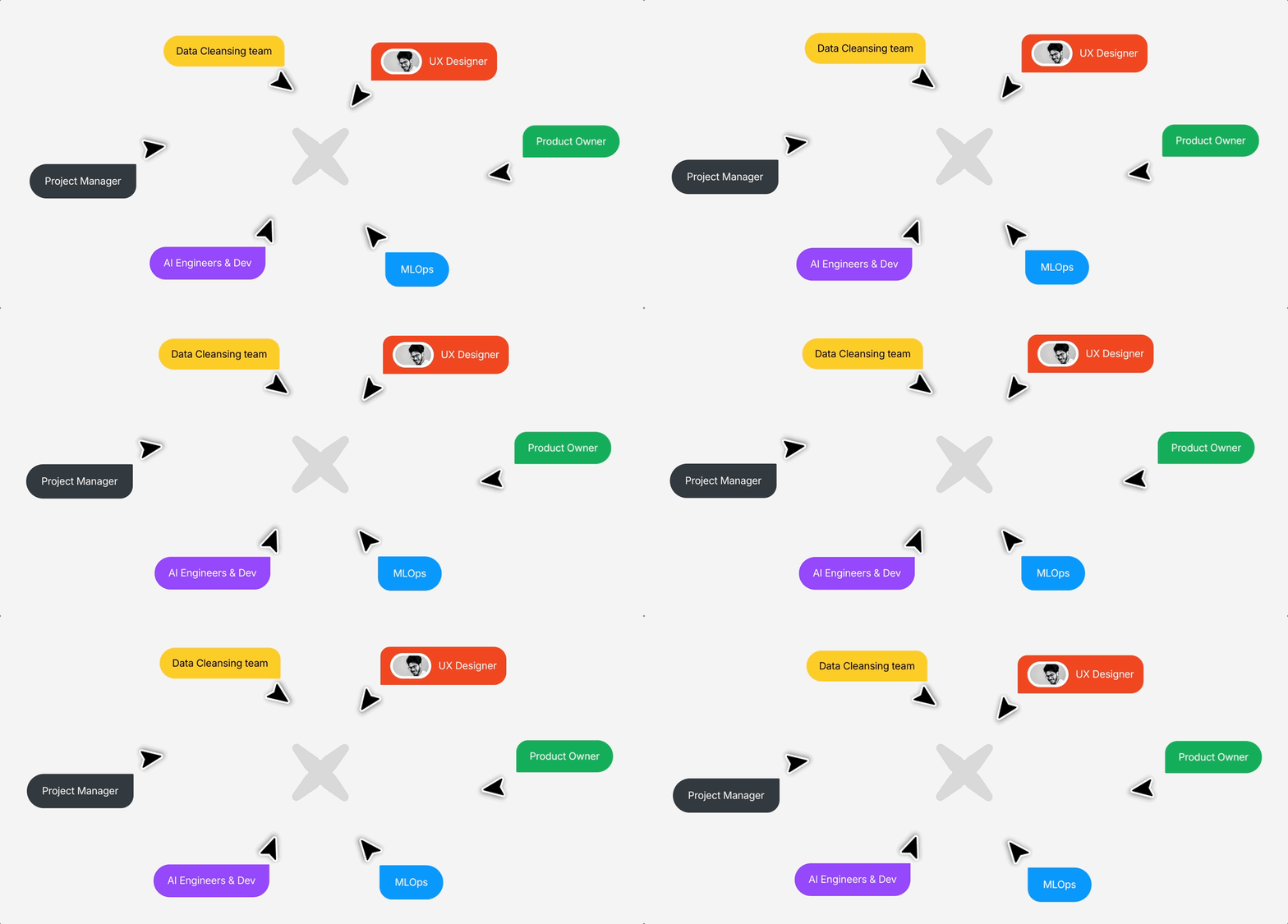
Drove UX from problem framing to launch for an AI-assisted annotation tool. Turned research insights into tested flows and shipped a production interface that simplifies advanced AI workflows through tight collaboration with engineering and direct users.
BUSINESS GOAL
Annotation teams at enterprise clients needed to produce datasets of 100,000+ images for AI model training — but existing tools assumed technical users. Non-technical annotators were doing everything manually from scratch, making the process slow, inconsistent, and expensive. The goal was to design an AI-assisted platform that non-technical users could operate confidently, while cutting annotation time and cost by at least 50% by shifting human effort from creation to review.
OUTCOME
AI pre-labelling reduced annotation time by 80% — exceeding the 50% target. Annotators shifted from labelling images from scratch to reviewing and correcting AI suggestions, which both accelerated throughput and improved dataset quality through more focused human attention.
Research Insights
KEY INDUSTRY FINDINGS
Global image annotation market valued at $1.5 billion in 2024 and projected to reach $5.2 billion by 2033, with a CAGR of 15.2%.
Annotation consumes 50-80% of computer vision project budgets and can extend timelines significantly beyond original schedules.
Manual annotation maintains 78.96% market share in 2024, highlighting continued reliance on human judgment despite automation advances.
Auto-labeling reduces annotation costs by 100,000x for large datasets using advanced foundation models.
INTERNAL RESEARCH INSIGHTS
AI engineers and data annotation teams say image annotation is a critical bottleneck in machine learning and computer vision development. Traditional manual annotation processes are
Time consuming
Manual annotation demands close attention to detail, taking about 5–7 minutes per image depending on complexity.
Consistency issues
Human annotators often vary in consistency across large datasets, reducing model training quality and performance.
Scaling Limitations
Organizations struggle to scale annotation to meet the demands of large datasets for effective AI model training.
MANUAL ANNOTATION METRICS
Simple Objects (e.g., boxes)
10-15 secs/obj
Complex Objects (e.g., Polygon)
2-5 mins/Obj
Segmentation Mask
5-15 mins/obj
73%
AI teams say data labeling is their biggest bottleneck
40hrs
average time to label 1,000 complex medical images
25%
error rate in manual segmentation tasks

kEY PLATFORM FEATURES
For Non-technical user,
To make annotation process faster, accurate, less manual work
Seamless Onboarding for Non-SMEs
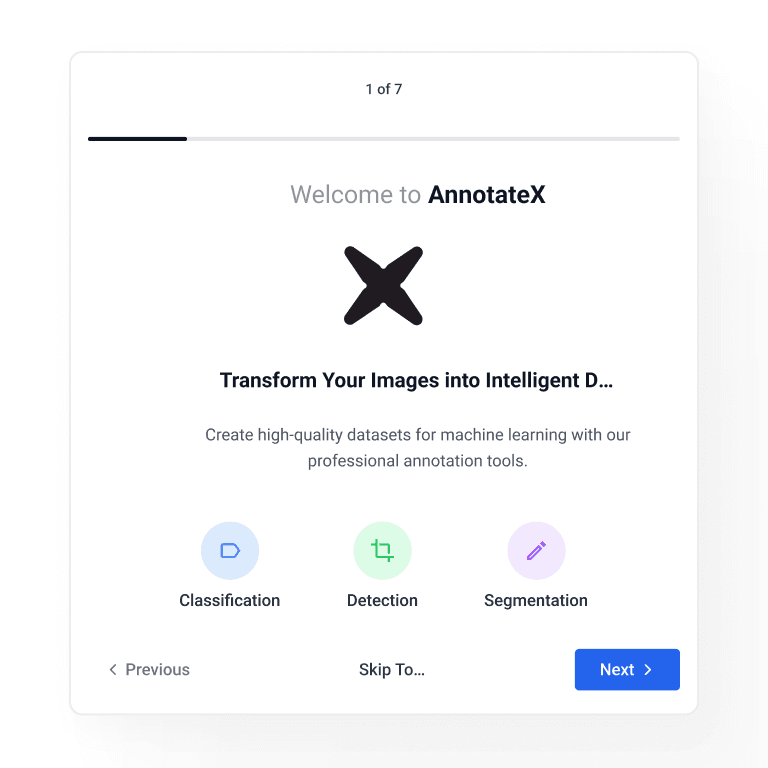
New users had no mental model of Classification, Detection, and Segmentation before starting work. A 7-step onboarding introduces each task type visually upfront — reducing mislabelled data caused by users who didn't understand what they were annotating.
Collaborative Workspace
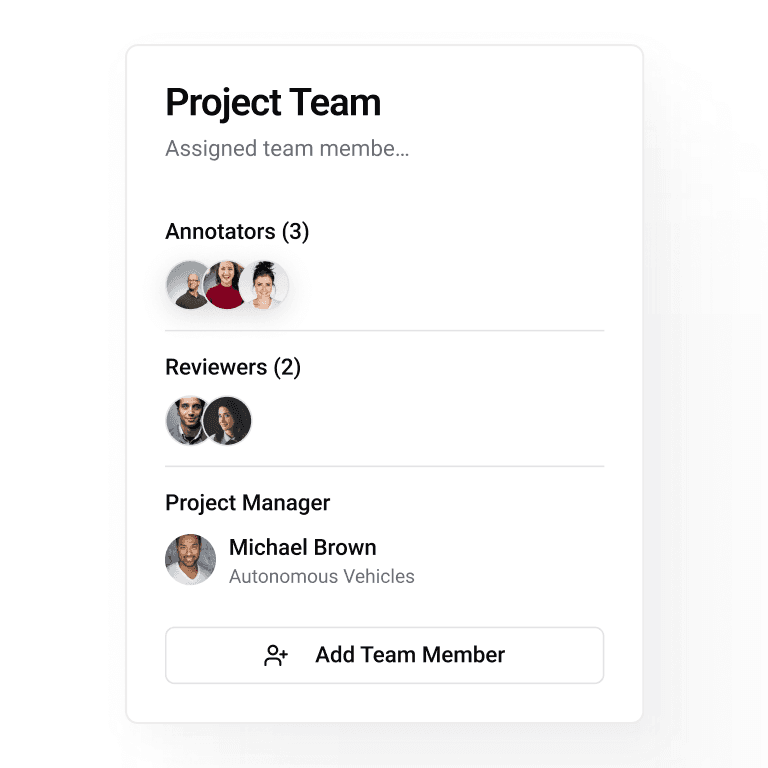
Annotators were accidentally accessing reviewer functions, causing workflow errors. Role-based permissions — Annotators, Reviewers, Project Manager — give each user only what they need, reducing cross-role mistakes and giving managers a clean overview without entering the annotation interface.
AI Assisted Labelling
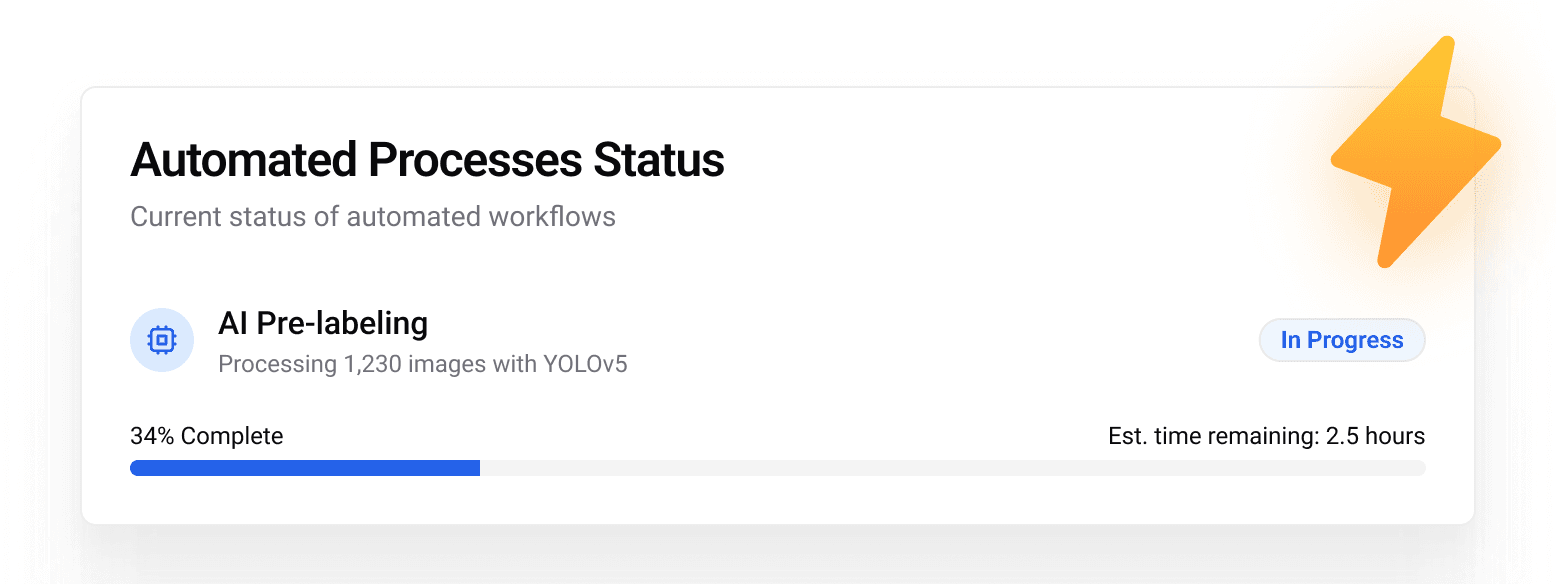
Teams had no visibility into whether pre-labelling jobs were running or stuck. Surfacing real-time status — model name, images processed, time remaining — made the AI process transparent, built trust, and eliminated repeated check-ins with engineering.
Intuitive Workspace
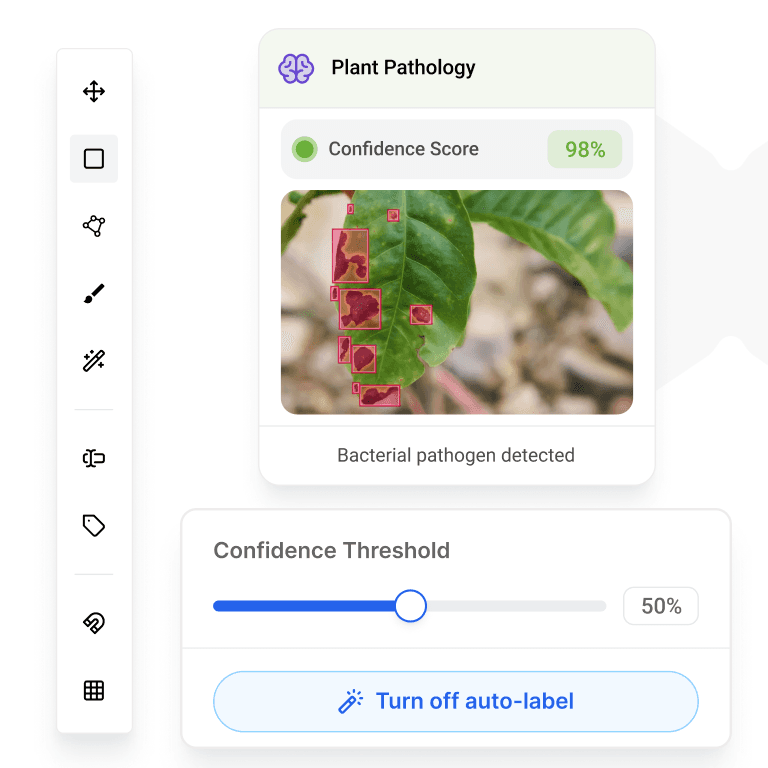
Users either over-trusted AI labels or ignored them entirely. Three control layers fix this: a per-label confidence score, an adjustable threshold slider, and a hard override to disable auto-label. Annotators gained real agency over the AI — increasing correct acceptances and reducing blind errors.
Analytics & Reporting

84% of labels were accepted directly from AI pre-labelling. The 16% human-correction rate becomes an actionable signal — a rising AI-correct percentage means the model is improving; a plateau means more training data is needed.
Customisable Shortcuts
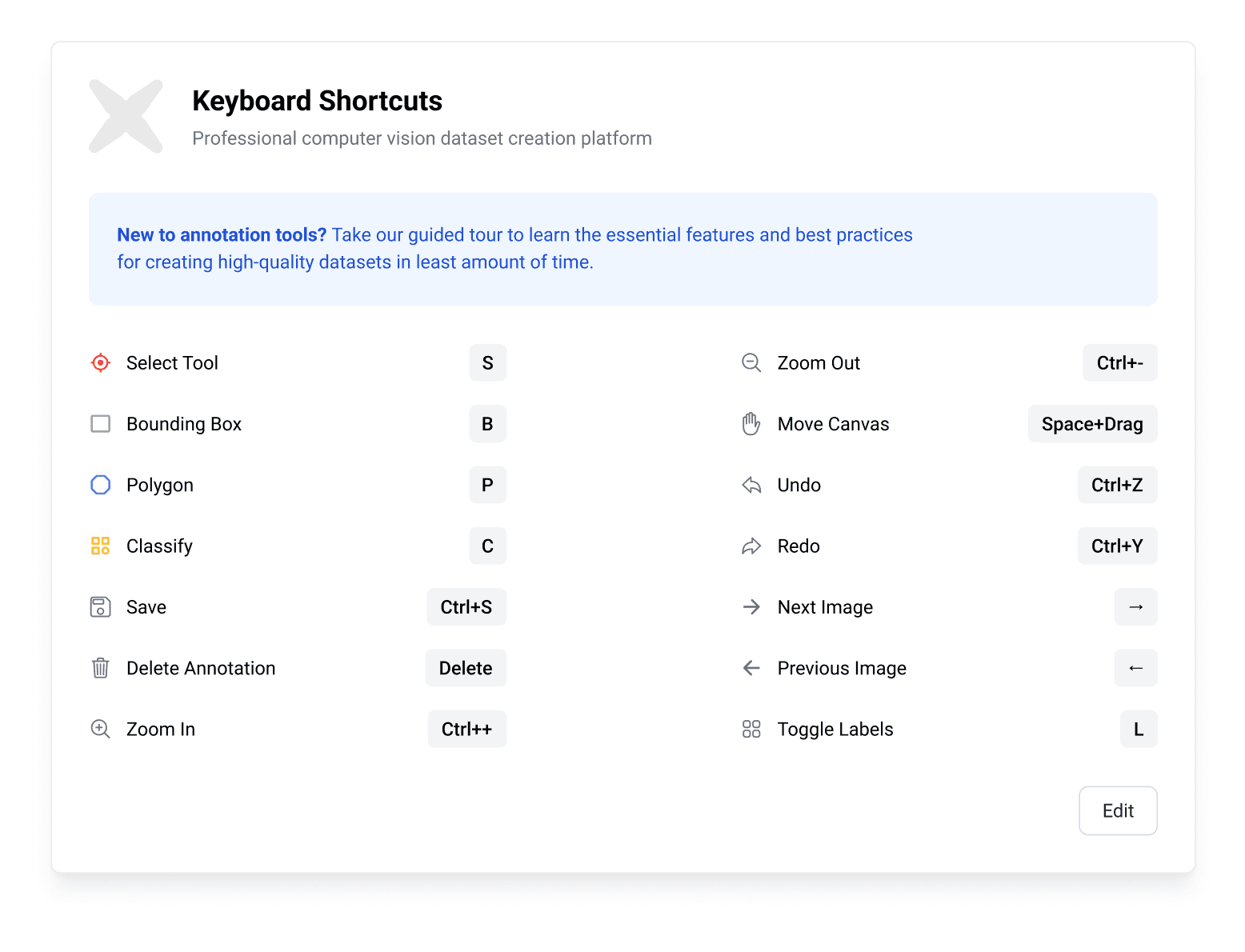
Expert annotators were losing significant time to repetitive mouse actions. Full keyboard shortcut coverage handles all primary actions, while a persistent guidance banner keeps the workspace approachable for newcomers — fast for experts, discoverable for beginners.
CONCLUSION
The platform reduced annotation time by 80% and helped teams produce datasets at a scale and consistency that wasn't possible manually. The original goal was efficiency. What we discovered was that efficiency and quality moved together — when annotators stopped doing repetitive groundwork, their attention improved.
The hardest design problem wasn't the interface. It was trust. Getting non-technical users to act on AI suggestions without blindly accepting them — or ignoring them entirely — required making the AI's confidence visible and giving users genuine control over it. That tension between automation and human agency is something I'd carry into every AI product I design after this.